Deploy site-specific robot skills in weeks.
We build a trainable digital twin from limited site inputs, train a robot skill inside the twin, and deliver a deployable Skill Pack with benchmarking, monitoring, and rollback.
Why AI Deployments Fail in the Physical World
The data + transfer bottleneck.
Unique Environments
Every site differs. Manual tuning and on-site data collection don’t scale.
Data Scarcity & Edge Cases
Rare failures and hazardous scenarios are expensive or unsafe to capture in the real world.
Sim-to-Real Gap
Policies trained in simulation break without domain randomization, benchmarking, and safety constraints.
How It Works
From site inputs to a deployable Skill Pack
Twin Builder
Turn CAD/BIM, scans, and short videos into a trainable digital twin.
Skill Studio
Define the task, constraints, and acceptance KPIs.
Training Engine
Generate synthetic scenarios and train in parallel (IL/RL/Hybrid).
Benchmark & Safety
Run benchmark suites, validate the safety envelope, generate evidence logs.
Deployment Pack
Integrate via ROS 2/API templates. Roll out with monitoring and rollback.
Typical pilot: ~4 weeks to first on-robot validation (scope-dependent).
Pilot Program
What you get in a pilot
Skill Pack
Trained policy/model for your specific robot, task, and environment.
- Trained Policy
- Model Weights
- Inference Container
Benchmark Protocol
Comprehensive safety and performance validation.
- Evidence Logs
- Safety Envelope
- Robustness Report
Deployment Pack
Everything needed for safe integration.
- Integration Templates
- Monitoring Dashboard
- Rollback Plan
01. Pilot Timeline
Discovery & Needs
Week 1-2
We analyze your CAD/BIM data and define the robot task.
Digital Twin & Training
Week 3-6
Training the policy in our physics-accurate simulation environment.
Integration & Scaling
Month 2-3
Deploying the Skill Pack to physical robots and validating performance.
02. What We Need
CAD / BIM / Point Clouds
Robot URDF / Mesh
Defined Use Case
Safety Zones / Constraints
Use Cases
Industry Applications
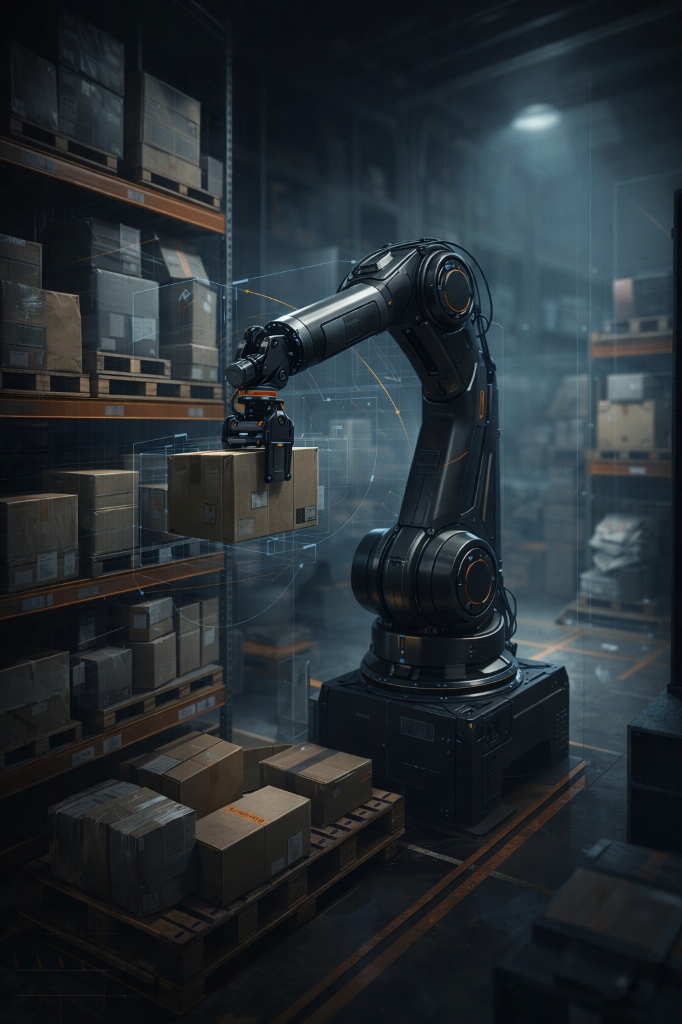
Industrial Manipulation
Warehouse automation, material handling, and fulfilment.
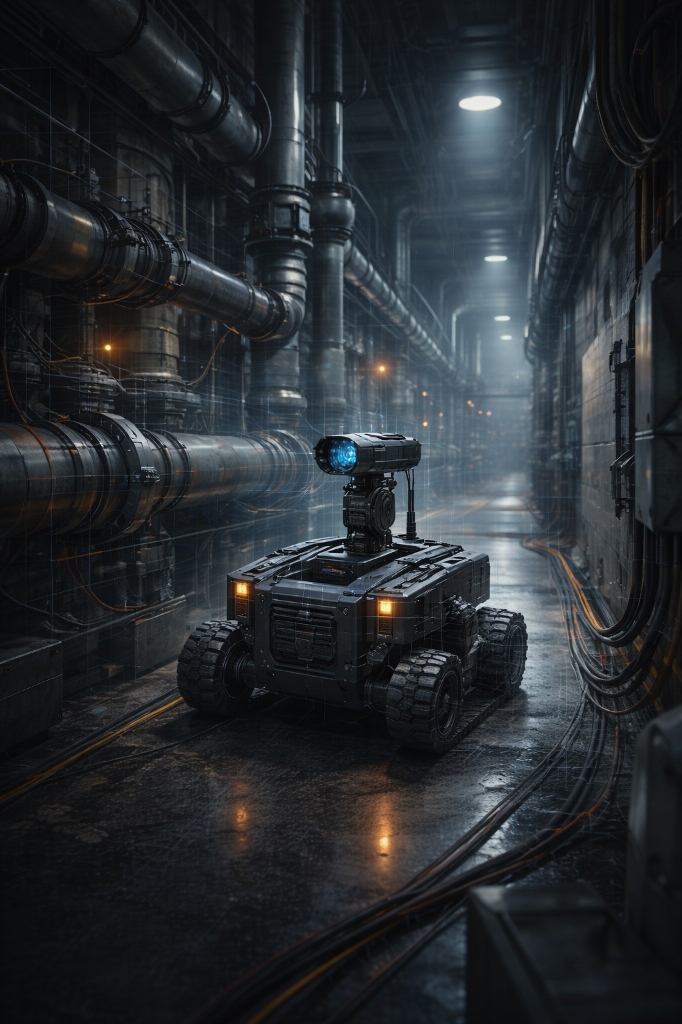
Inspection & Maintenance
Utilities, infrastructure, and facilities monitoring.
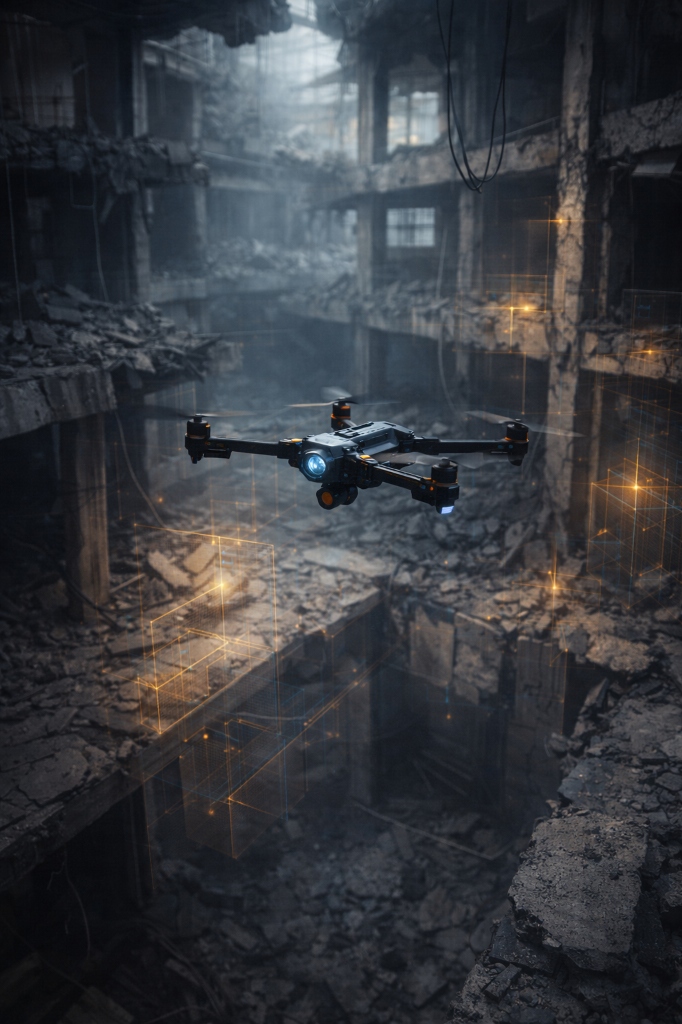
Disaster Response
Civil security and hazardous environment operations.
Proven Results
Indicative Metrics
UAV Obstacle DetectionCASE STUDY
Detecting thin wires in complex environments.
Synthetic training with domain randomization + targeted edge-case generation.
Up to 95% detection accuracy with up to 55% less training time (pilot scope).
Safety & Trust
Enterprise-Grade Reliability
Rigorous Benchmarking
* Example report view — final values depend on task and environment.
Data Governance
Safety-by-Design
Constraint-aware training, runtime monitoring & rollback.
Data Governance
Data minimisation, access controls, retention by agreement (GDPR-aligned).
EU Supported
euROBIN & Seeds of Bravery participation.
FAQ
About Syntetiq
We build a Digital Twin-to-Real Skill Factory that turns site inputs into deployable robot skills — with measurable benchmarks and safe rollout.
Our Mission
We enable organisations to deploy site-specific robot skills faster and with less operational risk. Our platform converts limited site inputs (CAD/BIM, scans, short videos, robot specs, safety constraints) into a trainable digital twin, trains the skill in simulation, and delivers a production-ready Skill Pack.
What makes our approach different is that we do not only deliver a model. Each pilot includes a benchmark protocol and evidence log (performance, robustness, safety envelope) plus a deployment pack with monitoring and rollback, so your team can run clear acceptance testing and scale safely.
Key principles
- Privacy-first data handling and data minimisation
- Verifiable benchmarking and repeatable acceptance criteria
- Integration-ready delivery (ROS 2 / API patterns) and rollback planning
With years of experience in developing web applications, mobile solutions, and automation systems, we understand that every solution must be unique and tailored to your business needs.
Ready to deploy site-specific robot skills?
Start your pilot application today. We'll guide you through the process of creating a digital twin and training your robot.